
Gap Fill Tool

Every trader has felt it. You wake up, check pre-market, and your position has gapped 4% against you overnight. The first question that races through your mind is: Does this gap fill?
You’ve probably heard the old trading floor wisdom that “gaps always fill.” It gets repeated in Discord servers and social media threads all the time. But how true is it, really? Does a 2% gap behave the same as a 6% gap? Does it matter whether the gap is up or down? And if it does fill, are we talking hours, days, or months?
Until now, answering those questions meant either trusting your gut, relying on secondhand anecdotes, or spending hours in a spreadsheet manually tagging gap days across years of price history.
We built something better.
Introducing the Gap Fill Tool
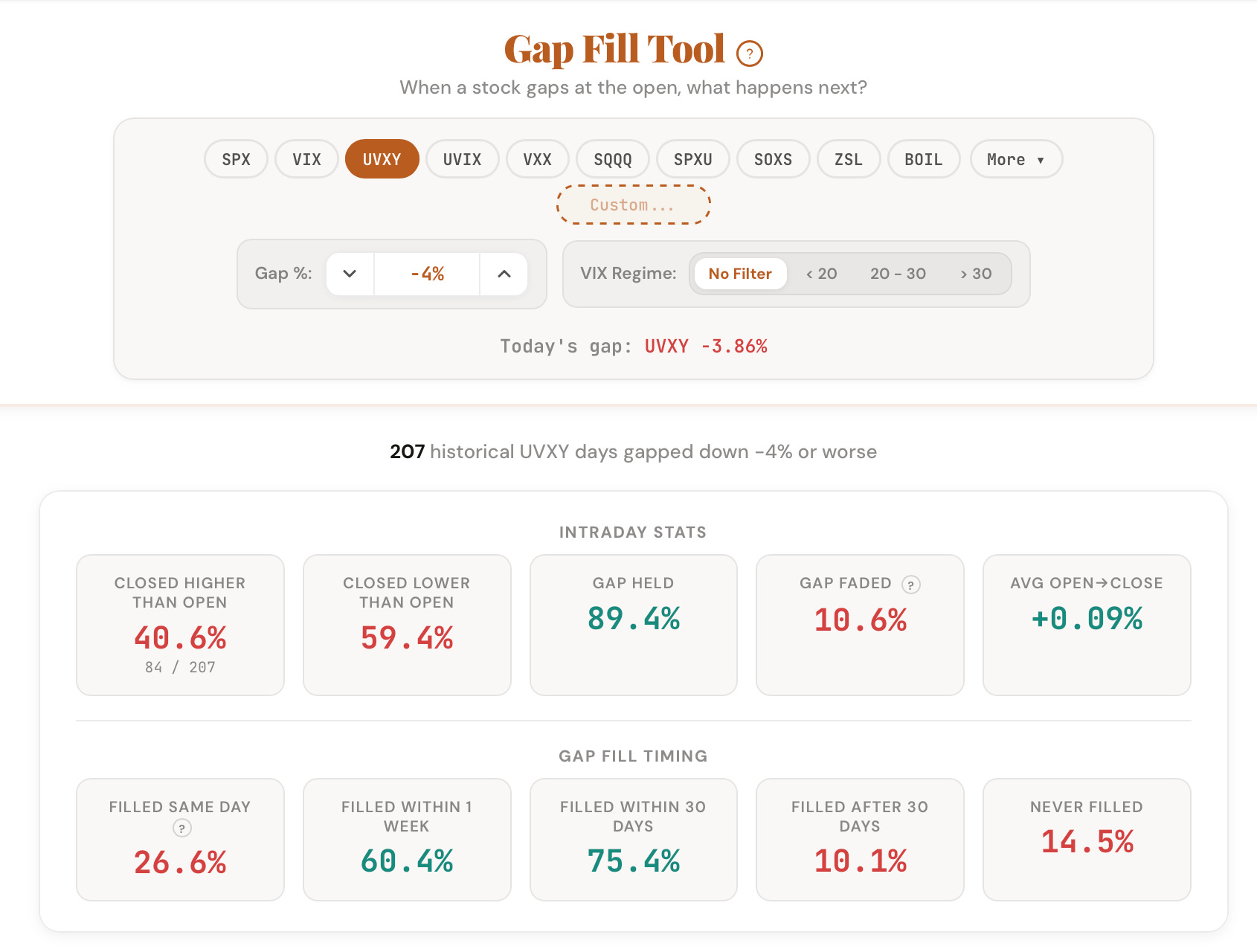
The Gap Fill Tool is the newest addition to the CI Volatility suite, and it does one thing exceptionally well: it replaces speculation with data.
Pick any ticker. Enter a gap percentage. The tool instantly pulls every historical occurrence that matches your criteria and breaks down exactly what happened next in documented, verifiable price action.
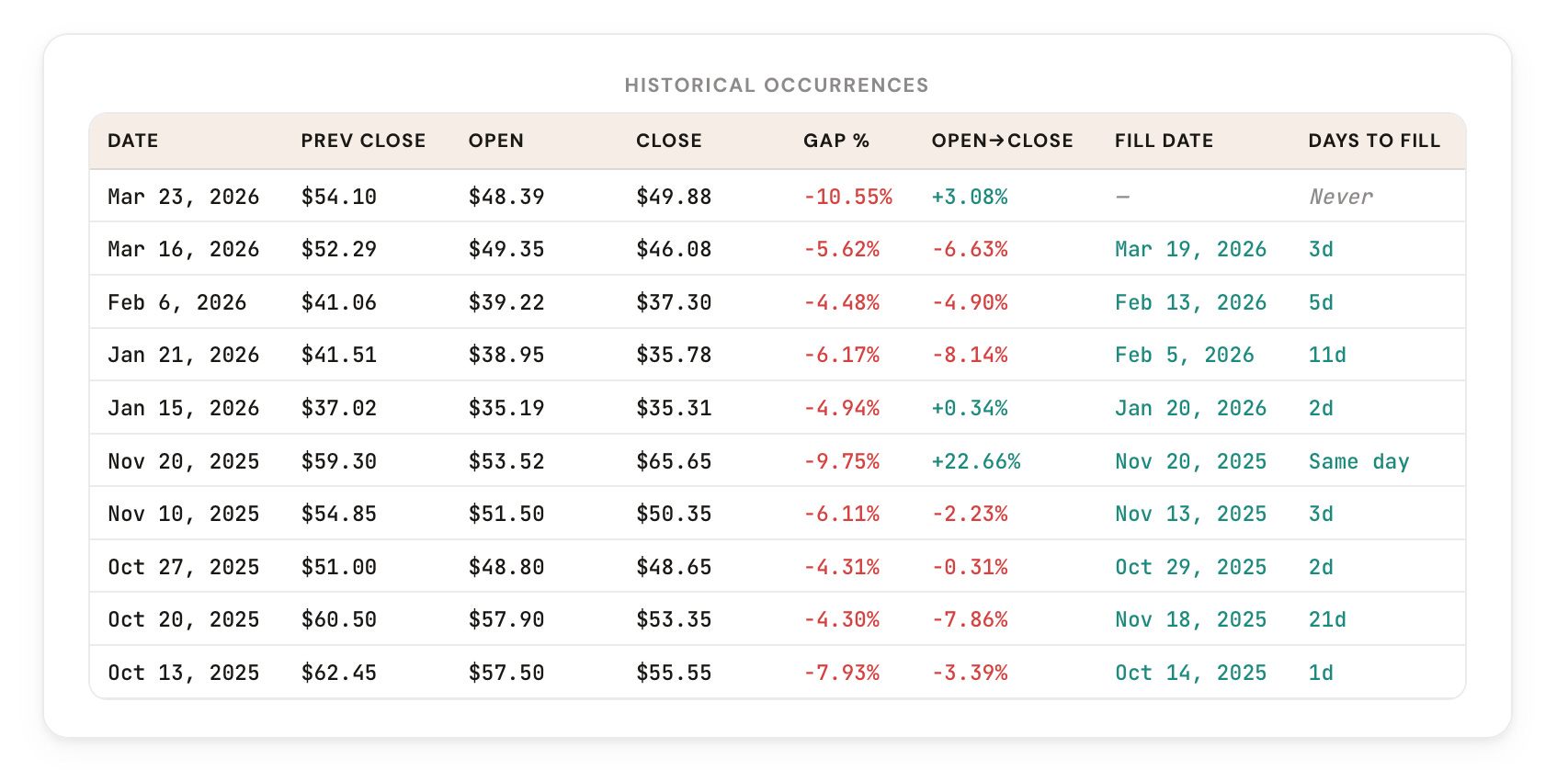
Why This Matters More Than You Think
Gaps are among the most psychologically loaded events in trading. They create urgency, trigger stops, and force decisions before most traders have finished their morning coffee. And yet the vast majority of gap-related trading decisions are made with almost no historical context.
Consider what a typical morning looks like without this data. UVXY gaps up 5% at the open. You check social media. Half the replies say “fade it,” half say “it’s running.” You make a decision based on tone, not evidence.
Now consider the alternative. You open the Gap Fill Tool, enter UVXY with a 5% gap-up threshold, and within seconds you know:
What percentage of similar gaps filled the same day
How the stock typically closed relative to the open on those days
Whether gaps of that magnitude on that ticker tend to hold or reverse
How Traders Are Using It
Pre-market prep
Check gap fill probabilities before the open to decide whether to fade, hold, or sit out entirely.
Position sizing
Adjust size based on whether historical data suggests the gap is likely to hold or reverse.
Stop placement
Use fill-timing data to set more informed time-based stops instead of guessing.
Backtesting setups
Cross-reference gap days with your own strategy entries to see how they overlap.
Volatility research
Study how gap behavior differs across leveraged ETFs versus broad indexes.
The Tool Is Live Now
The Gap Fill Tool is available in your dashboard under Premium Tools. If you’re a CI Volatility member, you already have access.